On this page
Health disclaimer: This page is general information, not medical advice. It does not diagnose, treat or replace your doctor. Talk to a doctor or pharmacist before you start, stop or combine supplements, especially if you have a health condition, take medication, or are pregnant.
Many people who care about healthy ageing already take more than fish oil and vitamins. Creatine, taurine, glycine with NAC (GlyNAC), vitamin C and NMN are some of the most discussed. This page goes through each one: what it is, what studies in humans actually show compared with animal or early studies, what is known about safety, and how certain the evidence is.
One thing first. Dietary supplements are not medicines. The US Food and Drug Administration (FDA) states that it does not have the authority to approve dietary supplements before they are marketed, and it does not test them for effectiveness. No supplement on this page is approved to slow or reverse ageing.
How to read the certainty ratings
- Moderate: several randomised controlled trials (RCTs) in humans, summarised in reviews or meta-analyses, point the same way.
- Low: a few small human trials, often short, with results that still need to be repeated.
- Very low: mostly animal or cell studies, or human data that only shows associations.
Creatine
What it is: A compound your body makes and also gets from meat and fish. It helps muscles produce energy for short, hard efforts.
What the human evidence shows: The International Society of Sports Nutrition (ISSN) position stand concludes that creatine consistently increases creatine stores in muscle and improves high-intensity exercise performance, which can lead to greater training adaptations. For healthy ageing, the most relevant data comes from older adults who also do strength training. A meta-analysis of 22 RCTs with 721 participants (average age 57–70) found that creatine taken during resistance training gave about 1.4 kg more lean mass and greater chest press and leg press strength than training with a placebo. An earlier meta-analysis also found greater gains in strength and in a chair-stand test, while noting the limited number of studies.
Important nuance: These benefits were seen together with strength training. The studies do not show that creatine alone slows ageing.
Safety: The ISSN states that short- and long-term use (up to 30 g a day for five years) has been safe and well tolerated in healthy people in the studies it reviewed. If you have kidney disease or take medicines that affect the kidneys, talk to your doctor first.
Certainty: Moderate for muscle mass and strength when combined with resistance training. Very low for any direct effect on ageing.
Taurine
What it is: An amino acid-like compound found in meat, fish and seafood, and also made by the body.
What the evidence shows: Taurine became famous after a 2023 study in Science by Singh and colleagues. They found that taurine levels in the blood fall with age in mice, monkeys and humans. Taurine supplements increased healthy lifespan and lifespan in mice and worms, and healthy lifespan in middle-aged monkeys. The human part of the study was observational: lower taurine levels were linked with several age-related diseases, and taurine levels rose after a single endurance workout. The authors themselves wrote that clinical trials in humans are needed to test whether taurine deficiency drives ageing in humans.
Important nuance: An association in humans does not show cause and effect, and results in mice often do not carry over to people.
Safety: Long-term safety data on taurine taken for ageing is limited. Discuss it with your doctor, especially if you take medicines for blood pressure or other conditions.
Certainty: Very low for human ageing. The strongest data is from animals.
GlyNAC (glycine + N-acetylcysteine)
What it is: A combination of the amino acid glycine and N-acetylcysteine (NAC). Together they are building blocks for glutathione, one of the body's own antioxidants.
What the human evidence shows: The best-known human study is a randomised, placebo-controlled trial by Kumar and colleagues, published in 2023 in the Journals of Gerontology. It included 24 older adults: 12 got GlyNAC and 12 got a placebo for 16 weeks, and 12 young adults were studied for comparison. In the GlyNAC group, glutathione deficiency, oxidative stress, markers of mitochondrial function, inflammation, insulin resistance, gait speed, strength and the 6-minute walk test improved, while they did not in the placebo group. The idea built on earlier work in aged mice.
Important nuance: The trial was very small and came from one research group. Larger, independent trials are needed before the results can be called established.
Safety: In the trial, GlyNAC was reported as safe and well tolerated over 16 weeks. NAC is also used as a medicine, so ask your doctor or pharmacist about interactions with any medicines you take.
Certainty: Low. Promising, but based on one small trial.
Vitamin C (ascorbic acid)
What it is: An essential vitamin and antioxidant. The body needs it to make collagen, absorb iron from plant foods and support the immune system.
What the human evidence shows: The NIH Office of Dietary Supplements (ODS) says most people get enough vitamin C from food. The recommended amount for adults is 90 mg a day for men and 75 mg for women, plus 35 mg for people who smoke. ODS states that people who eat a lot of fruit and vegetables may have a lower risk of some cancers and cardiovascular disease, but taking vitamin C supplements does not seem to protect against cancer, and it is not clear whether vitamin C itself protects the heart. Regular supplements do not reduce the risk of catching a cold for most people, though colds may be slightly shorter or milder.
Safety and interactions: ODS lists an upper limit of 2,000 mg a day for adults from all sources. Too much can cause diarrhoea, nausea and stomach cramps. In people with haemochromatosis, high doses can worsen iron overload. Vitamin C may interact with chemotherapy and radiation therapy, and in one study antioxidants including vitamin C reduced the effect of a statin and niacin combination.
Certainty: Moderate that most people get enough from food. Low that extra vitamin C slows ageing.
NMN (nicotinamide mononucleotide)
What it is: A molecule the body uses to make NAD+, which cells need for energy metabolism. NAD+ levels fall with age in animals, which is why NMN became popular.
What the human evidence shows: Human trials are small and short. In a 10-week RCT published in Science in 2021, NMN improved muscle insulin sensitivity in 25 postmenopausal women with prediabetes who were overweight or obese (Yoshino et al., 2021; the number 25 is stated in the paper's methods, PMC8550608). In a 60-day RCT with 80 healthy middle-aged adults, NMN raised blood NAD levels and walking distance in a 6-minute walk test increased more than with placebo. That second trial was funded and partly run by companies that make NMN.
Important nuance: Raising NAD levels in blood is not the same as slowing ageing. No human trial has shown that NMN extends life or healthy life.
Safety: No safety issues were found in these short trials, but long-term safety is unknown.
Certainty: Low for short-term metabolic markers. Very low for ageing.
Flemming's experience: test one thing at a time
Flemming, who coaches on this site, takes creatine, taurine, glycine, NAC and ascorbic acid (vitamin C) himself. He used to take NMN but takes GlyNAC instead now. He has also tried a range of longevity products. For the most part he felt no difference, and he stopped taking the ones where he could not see a benefit compared with the cost.
That is his personal experience, not a recommendation. But the method behind it is useful for anyone:
- Talk to a doctor first. Bring a list of every medicine and supplement you take, including doses. See Biochemistry and values.
- Start one thing at a time. If you start three supplements at once, you cannot tell which one does what.
- Decide in advance what you will look at. For example a blood value your doctor follows, training logs, sleep or how you feel. Write it down before you start.
- Give it a fixed period, then judge honestly. If you cannot see a benefit, ask yourself whether it is worth the cost and the effort.
- Stop what does not earn its place. Fewer products also means fewer possible interactions.
Training, sleep and food still do most of the work – see Training and Food. You can follow your fitness over time with the biological age calculator.
FAQ
Are any of these supplements approved to slow ageing? No. According to the FDA, dietary supplements are not approved before they are sold, and none is approved as an anti-ageing treatment.
Which of these has the strongest evidence? Creatine, for muscle mass and strength in older adults who also do strength training. Meta-analyses of RCTs support it.
Does taurine make you live longer? That has only been shown in animals. In humans, there is so far only association data, and the authors of the main study called for human trials.
Is GlyNAC proven? Not yet. The main human trial had 12 people on GlyNAC and 12 on placebo. The results are interesting but need to be repeated in larger trials.
How much vitamin C is too much? The NIH upper limit for adults is 2,000 mg a day from all sources.
Does NMN reverse ageing? No human study has shown that. Small trials show it raises NAD levels in blood and may affect some short-term markers.
Full disclaimer
This page is general information only and is not medical, nutritional or pharmaceutical advice. It does not replace a consultation, diagnosis or treatment by a qualified health professional. Do not start, stop or change medicines or supplements without your doctor or pharmacist. Supplements can interact with medicines and can be harmful in high doses. Flemming's experience is personal and is not a recommendation. Sources were checked in October 2026.
Sources
- FDA – Questions and answers on dietary supplements: https://www.fda.gov/food/information-consumers-using-dietary-supplements/questions-and-answers-dietary-supplements
- Kreider RB et al. ISSN position stand: safety and efficacy of creatine supplementation in exercise, sport, and medicine. J Int Soc Sports Nutr. 2017;14:18. https://doi.org/10.1186/s12970-017-0173-z
- Chilibeck PD et al. Effect of creatine supplementation during resistance training on lean tissue mass and muscular strength in older adults: a meta-analysis. Open Access J Sports Med. 2017;8:213–226. https://doi.org/10.2147/OAJSM.S123529
- Devries MC, Phillips SM. Creatine supplementation during resistance training in older adults – a meta-analysis. Med Sci Sports Exerc. 2014;46(6):1194–1203. https://doi.org/10.1249/MSS.0000000000000220
- Singh P et al. Taurine deficiency as a driver of aging. Science. 2023;380(6649):eabn9257. https://doi.org/10.1126/science.abn9257
- Kumar P et al. Supplementing glycine and N-acetylcysteine (GlyNAC) in older adults…: a randomized clinical trial. J Gerontol A Biol Sci Med Sci. 2023;78(1):75–89. https://doi.org/10.1093/gerona/glac135
- NIH ODS – Vitamin C: https://ods.od.nih.gov/factsheets/VitaminC-Consumer/
- Yoshino M et al. Nicotinamide mononucleotide increases muscle insulin sensitivity in prediabetic women. Science. 2021;372(6547):1224–1229. https://doi.org/10.1126/science.abe9985
- Yi L et al. The efficacy and safety of β-nicotinamide mononucleotide (NMN) supplementation in healthy middle-aged adults: a randomized clinical trial. GeroScience. 2023;45(1):29–43. https://doi.org/10.1007/s11357-022-00705-1
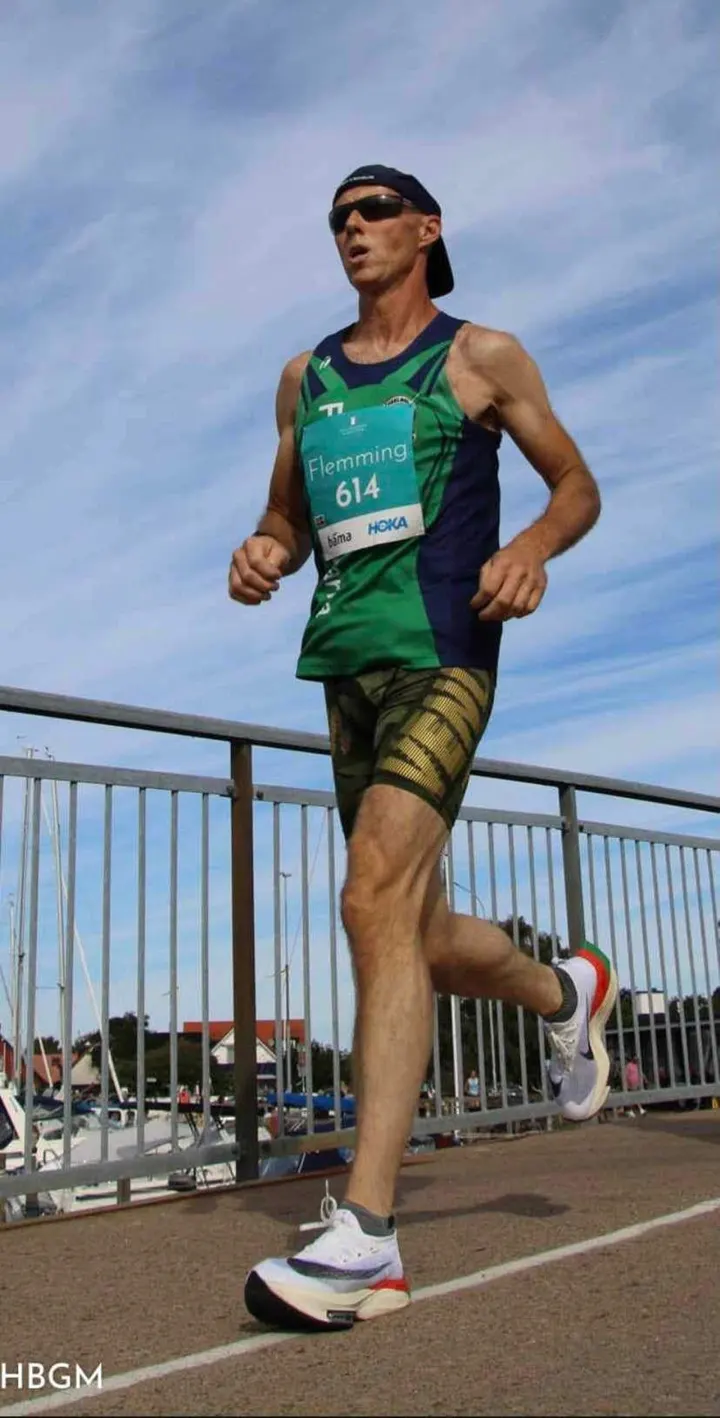
Former elite cyclist, master runner over 5000 m and 10 000 m.
Coaching with Flemming
A training plan with weekly follow-up
Running or cycling. I look at every session you log. First month free, no binding period, via Everfit.
$45 / £45 per month
Related
Biochemistry and values
Test your values first, then consider supplements.
TrainingTraining
Strength, balance and fitness with short intervals and plenty of rest.
FoodFood
Real, colourful food instead of ultra-processed products.
vo2max.ioBiological age calculator ↗
Estimate your starting point.